
How to Read a Tyre Sidewall: Size, Load Index, Speed Rating and Manufacture Date Explained
Look at the side of any tyre and you will see a string of letters and numbers that looks like code. In fact, it is one of the most useful pieces of information you have when buying tyres. It tells you the size, how much weight the tyre can carry, how fast it is rated to go and when it was made.
Knowing how to read it helps you buy the correct tyre, avoid paying for the wrong size, compare options fairly and spot a tyre that has been sitting too long. This guide breaks it down with a simple example.
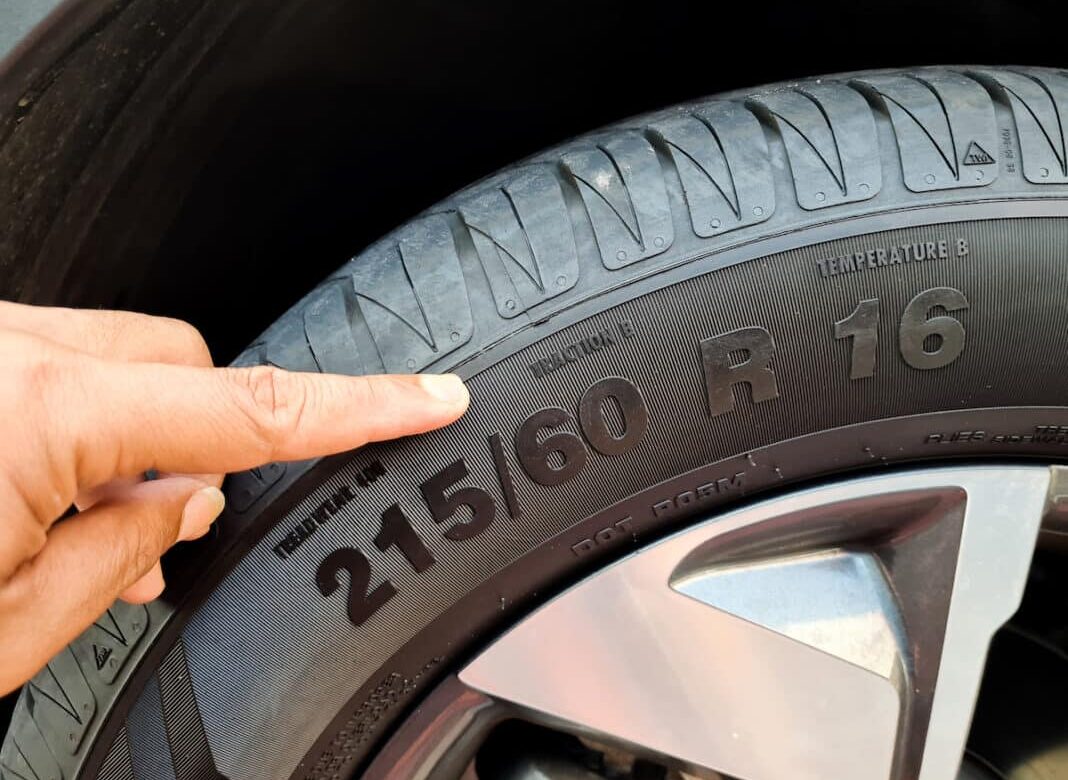
Quick answer: In a marking like 205/55 R16 91V, 205 is the width in millimetres, 55 is the height as a percentage of width, R means radial, 16 is the rim size in inches, 91 is the load index and V is the speed rating. A separate four-digit code shows the week and year it was made.
Step 1: Decode the size (205/55 R16)
| Part | Example | Meaning |
| Width | 205 | The width of the tyre in millimetres, measured from sidewall to sidewall. |
| Aspect ratio | 55 | The height of the sidewall as a percentage of the width. Here the sidewall is 55% of 205 mm. A lower number means a shorter, sportier sidewall; a higher number means a taller, more cushioned one. |
| Construction | R | Radial construction, which is the standard for modern cars, 4x4s, trucks and buses. |
| Rim diameter | 16 | The wheel size the tyre fits, in inches. |
You need all four values to match your wheel and vehicle. A tyre that is the right rim size but the wrong width or height can rub the body, affect the speedometer reading and change how the car handles. If you want a different size from the original, ask a technician first.
Step 2: Understand the load index (91)
The load index is a number that corresponds to the maximum weight one tyre can carry when properly inflated. It is not the weight itself. You look the number up in a table. Some examples:
| Load index | Max load per tyre | Typical use |
| 82 | 475 kg | Small hatchbacks |
| 91 | 615 kg | Mid-size passenger cars |
| 100 | 800 kg | Larger cars and some SUVs |
| 110 | 1,060 kg | Heavy SUVs and light commercial vehicles |
Never fit a tyre with a lower load index than the manufacturer specifies. If you regularly carry heavy loads, such as goods, passengers or a roof rack, choose a tyre with an adequate load rating and check the vehicle manual. Commercial tyres such as those for trucks and buses may show two numbers, such as 156/150, for single and dual fitment.
Step 3: Understand the speed rating (V)
The letter after the load index shows the maximum speed the tyre is built to sustain when carrying its rated load. Common ratings include:
| Letter | Max speed | Common on |
| Q | 160 km/h | Winter, light truck and some budget tyres |
| S | 180 km/h | Family cars and vans |
| T | 190 km/h | Family cars and many SUVs |
| H | 210 km/h | Sedans and performance-minded cars |
| V | 240 km/h | Performance cars and larger SUVs |
You are not being told to drive at these speeds. The rating also reflects how well the tyre handles heat and stress at normal highway speeds. As a rule, replace tyres with the same or a higher speed rating than your vehicle specifies.
Step 4: Check the manufacture date (DOT code)
Tyres age even when they are not used. The rubber hardens over time and can crack, so the date matters, particularly if you are buying from stock or a spare has been in the boot for years.
Look for the letters DOT followed by a series of characters. The last four digits show when the tyre was made: the first two are the week and the last two are the year. For example, 2724 means the 27th week of 2024.
- A tyre with a very recent date is a sign of fresh stock.
- Many manufacturers advise having tyres inspected regularly once they are several years old, and replacing them after about ten years regardless of tread.
- Check the date on your spare as well as the four on the car.
- If you cannot find or read the date, ask the dealer to show you.
Other markings you may see
- XL or Reinforced: the tyre is built for a higher load or inflation pressure than a standard one of that size.
- M+S: the tyre is designed for mud and snow, which is common on 4×4 and all-terrain tyres.
- LT, C or CP: light truck or commercial tyres, built for heavier duty.
- Tread-wear indicators (TWI): small bars in the grooves that become level with the tread when it is worn to the legal or safe limit. We recommend replacing when the tread reaches 1.6 mm.
- Maximum pressure: the highest pressure the tyre can take. This is not the pressure you should use. See our tyre pressure guide for how to find the right figure.
- Direction arrows or “Outside/Inside”: some tyres must be fitted in a specific direction or way round.
Where to find the right size for your vehicle
The tyre size recommended by the manufacturer is normally listed on the driver’s door sticker, inside the fuel flap or in the owner’s manual. The tyres on the vehicle now are the easiest guide, unless a previous owner changed the size. When in doubt, ask a technician to confirm the correct fitment before ordering.
How to choose between brands once you know the size
With the size, load index and speed rating confirmed, you can compare brands fairly. Consider:
- What you drive and how: city commuting, upcountry travel, load-carrying or fleet use.
- Whether the dealer is an authorised distributor, so you know the tyre is genuine and has fresh stock.
- Fitting, alignment and balancing, which affect how long any tyre lasts.
- Warranty and after-sales support.
Tyre Express is an authorised distributor for brands including Dunlop, Falken, Alliance, CEAT and Triangle, covering cars, 4x4s, trucks, buses and industrial vehicles. See our tyre brands page, or learn more about Triangle tyres for passenger, truck and heavy-duty needs.
Common mistakes when buying tyres
- Buying by price alone without checking size, load index and date.
- Mixing different tyre types or sizes on the same axle.
- Fitting a tyre with a lower load or speed rating than the vehicle requires.
- Ignoring the manufacture date on stock or second-hand tyres.
- Using the maximum pressure on the sidewall instead of the vehicle’s recommended pressure.
- Skipping alignment and balancing after fitting new tyres.
Frequently asked questions
What does 205/55 R16 mean on a tyre?
It means a tyre 205 mm wide, with a sidewall height of 55% of that width, radial construction, for a 16-inch rim.
Can I use a different tyre size from the one that came with my car?
Sometimes, but it needs to be checked first. The wrong size can rub the body, affect the speedometer and change handling. Ask a technician before you change.
What is the load index?
It is a code that shows the maximum weight a single tyre can carry. A higher number means a higher load capacity.
How do I know how old my tyre is?
Find the DOT code on the sidewall. The last four digits are the week and year of manufacture, for example 2724 for week 27 of 2024.
Is it safe to buy tyres that have been in stock for a long time?
Tyres age, so it is better to buy fresh stock from an authorised dealer. Ask to see the manufacture date before you pay.
When should I replace my tyres?
When the tread reaches 1.6 mm, when you see cracks, bulges or uneven wear, or when the tyre is old, even if the tread looks fine.
Need help choosing the right tyre?
If the numbers still look like code, bring your vehicle to Tyre Express and we will help you read them. Our team can confirm the correct size, load and speed rating for your car, 4×4, truck or bus, and fit your new tyres with alignment and balancing. Request a quote online, visit our Bombo Road centre, or contact us to find the branch nearest you.