
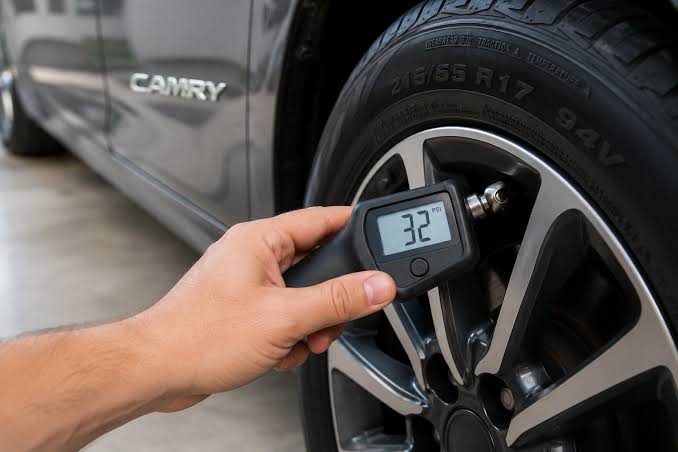
Tyre Pressure Guide for Kampala Drivers: The Right PSI, How to Check It and Why It Matters
Ask most drivers when they last checked their tyre pressure and you will get a pause, then a guess. Yet tyre pressure affects almost everything about how a car drives: how long the tyres last, how much fuel you use, how well the car brakes and how safely it handles a pothole on Jinja Road.
This guide explains, in plain language, what the right pressure is, how to check it properly, what happens when it is too low or too high, and how often to do it. If you are not sure about your tyres after reading, our team at any Tyre Express branch can check them for you.
Quick answer: Use the pressure recommended by your vehicle manufacturer, not the number printed on the tyre sidewall. Check it when the tyres are cold, at least once a month and before long trips, and always include the spare.
Where to find the correct tyre pressure for your vehicle
Many drivers look at the sidewall of the tyre and see a large number such as 44 or 51 PSI. That is the maximum pressure the tyre can safely hold. It is not the pressure your car needs. The right number is set by the vehicle manufacturer for your specific car, and you can usually find it in one of these places:
- a sticker on the driver’s door frame (the door jamb);
- inside the fuel filler flap;
- the owner’s manual, often under “tyres” or “specifications”.
You may see two values: one for normal driving and one for a heavily loaded vehicle. Some also list different pressures for the front and rear axles. Always use the figure that matches how you are driving. If you have fitted tyres in a different size from the original, ask a technician what pressure suits the new size and your vehicle.
What happens when pressure is too low
Under-inflation is the most common problem on the road. Because it develops slowly, drivers often do not notice it until the damage is done.
- Faster, uneven wear. The edges of the tread wear out first, so you replace tyres sooner than you should.
- Higher fuel use. A soft tyre has more rolling resistance, so the engine works harder.
- Heat build-up. A low tyre flexes more, generating heat that can weaken the structure and lead to a sudden failure, especially at speed or under load.
- Vague steering and longer braking. The car feels sluggish in corners and may take longer to stop.
- More damage from potholes. A soft tyre is easier to pinch against a rim edge, causing bulges and sidewall damage.
What happens when pressure is too high
Over-inflation is less common but also costly:
- the centre of the tread wears faster;
- the ride feels harsher and the car may bounce on rough roads;
- a smaller area of rubber touches the road, which can reduce grip, particularly in wet conditions;
- the tyre is more vulnerable to impact damage.
The right pressure is the one that lets the tyre sit flat on the road, wear evenly and carry the load it was designed for.
How to check your tyre pressure, step by step
- Check when the tyres are cold. Ideally before you drive, or after the car has stood for a few hours. Driving heats the air inside and raises the reading.
- Find the correct pressure for your vehicle on the door sticker or in the manual.
- Remove the valve cap and press a reliable gauge firmly onto the valve for a second or two.
- Read the number and compare it with the recommended value. Check you are reading PSI, bar or kPa consistently, as gauges differ.
- Add or release air as needed, then re-check.
- Refit the valve cap. It keeps dust and moisture out of the valve.
- Repeat for all four tyres and the spare. A spare that is flat is no help on the roadside.
If you check tyres that are already warm, for example at a fuel station after a long drive, expect a higher reading. In that case, do not release air to hit the cold figure. Instead, top up slightly if a tyre is low and re-check when the tyres have cooled.
How often should you check?
- At least once a month. Tyres lose air slowly over time even when nothing is wrong.
- Before long trips, especially upcountry journeys with luggage and passengers.
- When the load changes, for example when you carry extra passengers or cargo, or tow.
- After hitting a pothole or kerb hard, and whenever the car pulls to one side.
- When there is a noticeable change in weather or temperature.
Why Kampala driving makes pressure checks more important
City conditions are demanding on tyres. Stop-start traffic, heat, uneven road surfaces and potholes all put stress on the tyre and rim. Occasional hits can cause slow leaks that you will not see. Long upcountry trips with a full load add more heat and more weight. That is why a quick check each month is a small habit with a big return.
Signs your tyres may be under-inflated or damaged
- The tyre looks flatter at the bottom than the others.
- The car pulls to one side or the steering feels heavy.
- Fuel consumption has risen with no other explanation.
- Tread is wearing on the outer edges or in the centre only.
- There are bulges, cuts or cracks on the sidewall.
- A tyre needs air repeatedly, which usually points to a puncture, a faulty valve or a leaking rim.
A tyre with a bulge or sidewall cut should not be driven on. Have it inspected right away.
Pressure, alignment and balancing work together
Correct pressure helps your tyres wear evenly, but it cannot fix a car that is pulling or vibrating. If one tyre is wearing differently, or you feel a shake in the steering wheel at speed, the cause may be poor alignment or an unbalanced wheel. Tyre Express offers wheel alignment and balancing, and truck alignment is available at our Dunlop Zone centre. Having these checked when you fit new tyres gives you the full benefit of the tyre you paid for.
When to replace the tyre instead of re-inflating
Air is not a fix for a worn tyre. Replace the tyre if:
- the tread is at or below 1.6 mm, or the wear indicators are level with the tread;
- there are cracks, cuts, bulges or exposed cord;
- the tyre has been driven flat for any distance;
- it keeps losing pressure after being checked for punctures and valve problems.
See our guide on tyre brands to compare options for cars, 4x4s, trucks and buses, or request a quote for the size you need.
A note on tyre pressure and batteries
Many modern cars show a low-pressure warning light on the dashboard. If you have seen warning lights recently, it is also worth testing your battery, as electrical faults can cause false readings on some vehicles. We offer battery testing and replacement and stock Amaron batteries.
Frequently asked questions
What PSI should my car tyres be?
It depends on the vehicle and the tyre size. Check the sticker on the driver’s door frame, the fuel flap or your owner’s manual. Do not use the maximum pressure printed on the tyre sidewall.
Should I check tyre pressure when the tyres are hot or cold?
Cold is best, because the air inside expands when the tyres heat up. If you must check warm tyres, expect a slightly higher reading.
How often should I check my tyre pressure?
At least once a month and before every long trip. Check the spare as well.
Do trucks and buses need different pressures?
Yes. Commercial vehicles often run at much higher pressures and the right figure depends on the load and axle. Follow the manufacturer’s load and inflation guidance or ask a technician.
Why does one tyre keep losing air?
Common causes are a puncture, a damaged or loose valve, or a leak at the rim. Have it inspected rather than topping it up repeatedly.
Can wrong pressure damage new tyres?
Yes. Incorrect pressure can cause uneven wear, heat damage and sidewall injury, shortening the life of even a premium tyre.
Get your tyres checked in Kampala
If you are unsure about your tyres, drop in to a Tyre Express centre on Jinja Road, at the Dunlop Zone in Banda, or on Bombo Road. Our technicians can inspect them, advise on fitting, alignment and balancing and help you choose the right replacement. Contact us for opening hours and phone numbers, or read more about Tyre Express.