
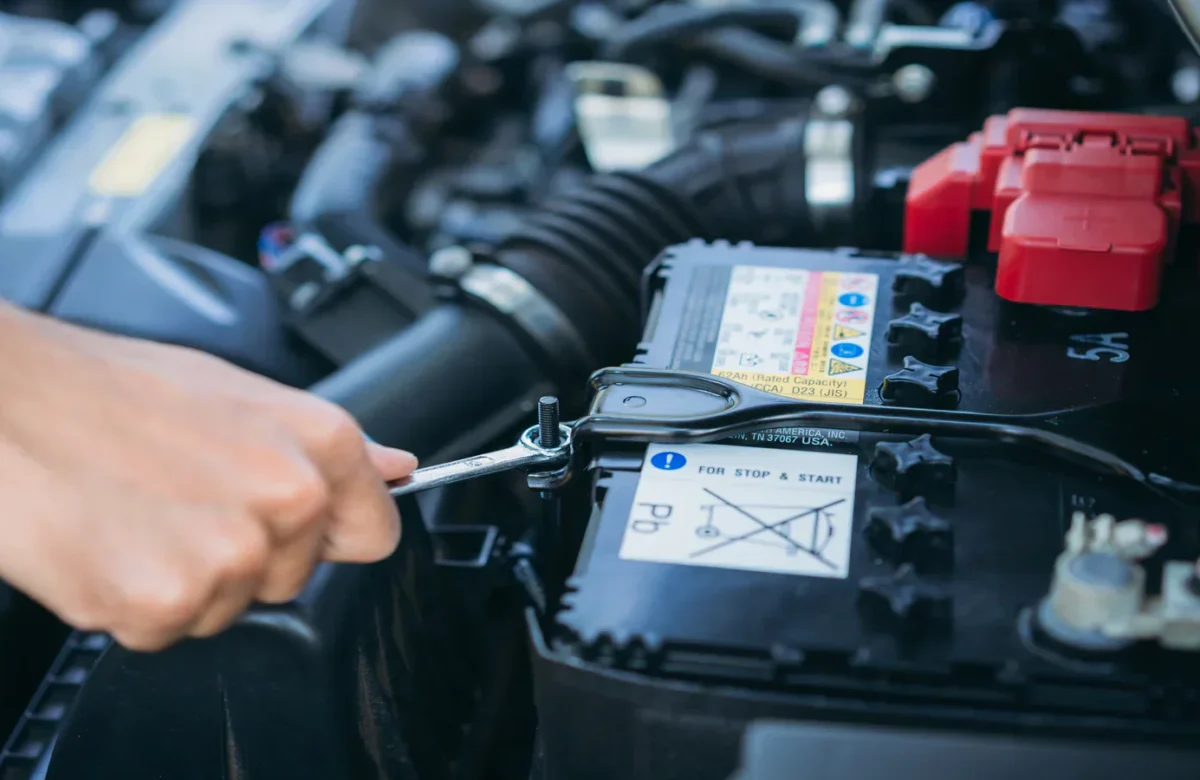
Why Car Batteries Die Faster in Uganda — And What Every Driver Must Know
Published by: Tyre Express Uganda
Few things are more frustrating than turning your key in the morning and hearing nothing but a faint click. A dead battery is one of the most common vehicle problems faced by Ugandan drivers — and it happens far more frequently here than in many other countries.
If you’ve ever been stranded in Kampala traffic, on Entebbe Road, or somewhere on the highway to Mbarara with a dead battery, you know exactly how disruptive it can be. The good news is that most battery failures are entirely preventable — if you understand why they happen and what signs to watch for.
This guide covers everything Ugandan drivers need to know about car battery problems, written by the team at Tyre Express Uganda — your trusted battery and tyre specialists since 2009.
Why Uganda Is Especially Hard on Car Batteries
Before diving into specific problems, it’s important to understand why Uganda’s environment puts extra strain on vehicle batteries:
1. Extreme Heat
Kampala and much of Uganda sits close to the equator, meaning temperatures stay high year-round. Heat is the number one enemy of battery life. It causes the battery’s internal fluid to evaporate and accelerates the chemical reactions that degrade battery plates. A battery that might last 4–5 years in a cooler country may last only 2–3 years in Uganda.
2. Frequent Short Trips
Many urban drivers in Kampala make very short trips — home to work, school runs, quick errands. A car’s alternator recharges the battery while the engine runs. Short trips do not give the alternator enough time to fully recharge the battery, leading to gradual discharge over weeks and months.
3. Traffic Congestion
Kampala is one of East Africa’s most congested cities. Sitting in traffic with the engine idling, while running the air conditioner, headlights, and phone charger, drains the battery faster than it is being recharged.
4. Power Grid Instability
Frequent power cuts in Uganda mean many vehicle owners charge their phones, run inverters, and use their cars as power sources — all of which drain the battery when the engine is off.
5 Battery Problems Ugandan Drivers Face Most Often
1. Battery Dies Overnight Without Warning
The Problem:
Your car was running perfectly the evening before, but it won’t start in the morning. This sudden failure catches many drivers off guard.
Why It Happens:
A battery that seems fine may already be at the end of its life. Batteries don’t always give obvious warning signs — they can hold enough charge for normal daily use but fail completely when temperatures drop at night or when they are asked to provide the extra power needed to start the engine cold.
Other causes include a parasitic drain — an electrical component (interior light, faulty alarm system, or stuck relay) that keeps drawing power even when the car is off.
What You Should Do:
- If your car is over two years old, get the battery tested at least once a year — especially before the rainy season
- Check that all interior lights are off when you leave the vehicle
- If you experience one sudden failure, do not assume it won’t happen again — have the battery tested immediately
Tyre Express Uganda offers free battery testing at all three branches. Our technicians use professional diagnostic equipment to measure battery health accurately — not just voltage. This takes less than 10 minutes and could save you from being stranded.
2. Battery Warning Light on the Dashboard
The Problem:
Many drivers in Uganda ignore the battery warning light on the dashboard, either because they don’t know what it means or because the car still seems to be running fine.
Why It’s Dangerous:
The battery light does not always mean your battery is flat. It can also indicate a problem with the alternator — the component that charges the battery while the engine runs. If the alternator fails, your battery will drain completely, often within 30–60 minutes of driving, leaving you stranded wherever you happen to be.
What You Should Do:
- Never ignore the battery warning light
- Pull over safely and call for assistance if you see this warning while driving
- Have both the battery AND the alternator tested — they are part of the same electrical system
3. Slow Engine Cranking at Startup
The Problem:
When you turn the key (or press the start button), the engine cranks slowly — a sluggish “rrrr-rrrr-rrrr” sound instead of the sharp, immediate startup you’re used to.
Why It Happens:
This is one of the clearest early warning signs that your battery is weakening. It means the battery can still hold some charge but does not have enough power to turn the starter motor at full speed.
This problem becomes much worse in the early morning when temperatures are slightly cooler, and engine oil is thicker — requiring more electrical effort from the starter.
What You Should Do:
- Do not ignore slow cranking and hope it resolves itself — it will get progressively worse until the battery fails completely
- Book a battery test as soon as you notice this symptom
At Tyre Express Uganda, if our free battery test shows your battery is weak, we can replace it on the spot with a genuine Amaron battery — one of the world’s most trusted maintenance-free batteries, specifically tested for performance in hot climates like Uganda’s.
4. Corrosion on Battery Terminals
The Problem:
White or blue-green crusty deposits building up around the battery terminals (the metal connectors where cables attach to the battery). This is extremely common in Uganda due to humidity and heat.
Why It Happens:
When a battery vents gas during normal operation, the gas reacts with the metal terminals and the surrounding air to form corrosion. Humidity accelerates this process significantly.
Why It Matters:
Corrosion creates electrical resistance between the battery and the vehicle’s electrical system. This means less power gets through, causing all the same symptoms as a weak battery — slow starting, electrical faults, dimming lights — even if the battery itself is still strong.
What You Should Do:
- Visually inspect your battery terminals monthly — you can see corrosion easily by opening the bonnet
- If you see corrosion, do not ignore it. A technician can clean the terminals quickly and inexpensively
- Never try to scrape terminal corrosion with metal tools without first disconnecting the battery — this can cause sparks
5. Buying Low-Quality or Recycled Batteries
The Problem:
Uganda’s second-hand battery market is large. Batteries are imported (sometimes illegally), refurbished, or simply resold after failing in other vehicles. Many drivers unknowingly buy these as “new” batteries at low prices.
The Real Cost:
A cheap battery may cost UGX 80,000–120,000 less upfront — but if it fails in 3 months, you’ve spent more money and time than if you’d bought a genuine battery from the start. Worse, a failing battery can damage your vehicle’s alternator — an expensive repair that runs into millions of shillings.
How to Spot a Suspicious Battery:
- No manufacturer label or a label that looks printed cheaply
- No clear manufacture date (all genuine batteries have a date code)
- Price that is dramatically below market rate
- Seller cannot provide a warranty
Tyre Express Uganda is an authorised dealer for Amaron batteries — one of the most respected battery brands globally, manufactured by Amara Raja Energy & Mobility. Amaron batteries are built specifically for maintenance-free, long-life performance in demanding conditions. Every battery we sell comes with a manufacturer warranty and full documentation.
How Long Should a Car Battery Last in Uganda?
| Usage Pattern | Expected Battery Life in Uganda |
|---|---|
| Short daily city trips (Kampala commuter) | 2 – 3 years |
| Mixed city and highway driving | 3 – 4 years |
| Fleet/commercial vehicle (heavy use) | 2 – 3 years |
| Occasional use (weekends only) | 2 – 4 years (risk of sulphation) |
These are general estimates. Heat, electrical load, and battery quality all affect lifespan. Regular testing is the only way to know for certain.
Signs Your Battery Needs Replacing Now
✅ Battery is more than 3 years old
✅ Engine cranks slowly at startup
✅ Headlights are dimmer than usual
✅ You’ve needed a jump-start more than once
✅ You can see visible corrosion or swelling on the battery case
✅ Electrical accessories (radio, windows, AC) behave erratically
If two or more of these apply to your vehicle, do not delay — book a battery test today.
Tyre Express Uganda: Your Battery Specialists in Kampala
Tyre Express Uganda provides a complete battery service at all branches:
- ✅ Free battery testing — professional diagnostic equipment, not guesswork
- ✅ Free battery fitting — proper installation with correct terminal connections
- ✅ Emergency battery recharge — if your battery is flat but still usable
- ✅ Genuine Amaron batteries — all sizes for cars, SUVs, 4x4s, trucks, and buses
- ✅ Warranty-backed purchases — every battery sold with documentation
Visit Us
| Branch | Location | Phone |
|---|---|---|
| Main Branch (Jinja Road) | Plot 101, JR Complex, Near New Vision, Kampala | 0703 337333 |
| Dunlop Zone (Banda) | Moil Fuel Station, Plot 68, Jinja Road | 0700 699415 |
| Bombo Road | Plot 47 & 48, Petro Fuel Station, Wandegeya | 0750 854680 |
| Amaron Battery Pitstop | Plot 47 & 48, Petro Fuel Station, Bombo Road | 0750 854680 |
Hours: Monday – Saturday, 9:00 AM – 6:30 PM
WhatsApp: +256 751 306 838
Website: tyreexpressuganda.com
Email: customer.care@tyreexp.com
The Bottom Line
Car batteries fail silently and suddenly — but they don’t have to. With regular testing, proper maintenance, and a genuine quality battery fitted by professionals, you can avoid the stress and cost of unexpected breakdowns.
In Uganda’s challenging climate and road conditions, your battery works harder than most drivers realise. Give it the attention it deserves.
Visit Tyre Express Uganda for a free battery test today — no appointment needed.
Got a battery question? Send us a message on WhatsApp or leave a comment below and our team will get back to you.