
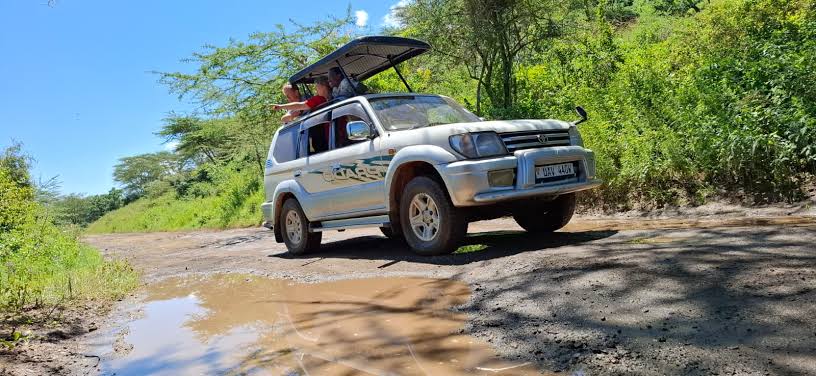
Best Tyres for Safari & Off-Road Driving in Uganda’s National Parks
Uganda’s national parks are some of the most rewarding self-drive destinations in East Africa — but the roads getting you there are nothing like Kampala’s tarmac. Murchison Falls, Queen Elizabeth, Kidepo Valley, and Bwindi all involve long stretches of murram, seasonal mud, loose gravel, and the occasional river crossing during the wet season. If you’ve read our guide on why tyres keep getting damaged on Kampala roads, you already know how much road surface affects tyre health — and safari routes push that even further.
The tyres that get you comfortably through city traffic are rarely the right choice for a game drive. Fit the wrong set and you’re looking at reduced grip, higher puncture risk, and a much rougher ride on corrugated roads. Here’s what actually matters when choosing tyres for safari and off-road driving in Uganda.
Why Standard Road Tyres Struggle on Safari Routes
Most tyres that come standard on SUVs and saloon cars in Kampala are built for tarmac — smooth tread patterns, softer sidewalls, and compounds optimised for fuel efficiency and quiet rides. On a game park access road, those same features become weaknesses:
- Shallow, close-packed tread clogs with mud and loses grip instead of clearing itself
- Softer sidewalls are more vulnerable to sharp rocks and deep ruts
- Lower ground clearance profiles increase the risk of sidewall damage on uneven terrain
- Standard compounds wear faster on abrasive murram and gravel than on tarmac
None of this means your everyday tyres are unsafe in town — it just means a safari trip calls for a different set of priorities.
What to Look for in a Safari or Off-Road Tyre
1. Tread Pattern Built for Loose Surfaces
Look for an all-terrain (A/T) tread pattern as the minimum for most safari routes — wider grooves and larger tread blocks that bite into mud, sand, and gravel while still being comfortable enough for the tarmac sections of your journey. If you’re planning serious off-road driving, deep river crossings, or routes prone to heavy mud (parts of Kidepo Valley and Murchison Falls in wet season), a mud-terrain (M/T) tyre offers more aggressive self-cleaning tread, at the cost of a slightly noisier and firmer ride on tarmac. Browse our full range of tyres for cars, 4x4s, trucks and buses to see what’s available for your vehicle.
2. Reinforced Sidewalls
Rocky trails and deep ruts put far more stress on sidewalls than city driving does. Tyres with reinforced sidewall construction — often marketed for 4×4 and off-road use — resist cuts and punctures far better than standard passenger tyres.
3. The Right Load Rating
A fully loaded safari vehicle — passengers, camping gear, fuel cans, coolers — weighs considerably more than the same car empty. Make sure your tyres’ load index comfortably covers your vehicle’s expected weight when fully packed, not just its empty kerb weight.
4. Correct Size for Your Vehicle
Fitting larger, more aggressive tyres than your vehicle’s specification can affect speedometer accuracy, ground clearance calculations, and even suspension geometry. Always confirm the correct size range for your specific make and model before upgrading.
Tyre Prep Checklist Before a Self-Drive Safari
A few checks before you leave Kampala can save you a stressful roadside situation deep in a national park, often hours from the nearest tyre shop:
- Tread depth — start the trip with healthy tread on all four tyres, not just enough to pass at home
- Spare tyre condition — check pressure, tread, and age; a neglected spare is no help on a remote road
- Consider two spares for multi-day trips into remote parks like Kidepo Valley, where recovery options are limited
- Tyre repair kit — a plug kit and portable compressor can be the difference between a five-minute fix and a long wait
- Correct tyre pressure — many drivers lower pressure slightly for sand or soft mud, then re-inflate for tarmac; know your vehicle’s recommended range for both
- Wheel alignment and balance check — corrugated roads amplify any existing alignment issue into a much rougher, faster-wearing ride; see our wheel balancing & alignment service for details
For a deeper look at puncture prevention before you head out, our post on what causes frequent tyre punctures and how to avoid them is worth a read too.
Seasonal Considerations
Uganda’s dry and wet seasons change what “off-road ready” actually means:
- Dry season (roughly Dec–Feb, Jun–Aug): Expect dust, loose gravel, and washboard corrugations. Tyre durability and heat resistance matter most.
- Wet season (roughly Mar–May, Sep–Nov): Expect mud, slippery murram, and reduced traction, especially on inclines near Bwindi and the Rwenzori foothills. Tread pattern and grip become the priority.
For more on how Uganda’s climate affects tyres year-round, see our related post on how Uganda’s sun and rainy seasons quietly wear out your tyres.
If your safari spans both a wet-season park and city driving before and after, an all-terrain tyre is usually the most practical single choice — it won’t outperform a dedicated mud-terrain tyre in deep mud, but it copes well across the full range of conditions you’ll actually face.
Common Mistakes Self-Drive Safari Travellers Make
- Leaving tyre prep to the last minute. Inspecting tyres the night before a dawn departure doesn’t leave time to source a replacement if something’s wrong.
- Ignoring the spare. A worn or under-inflated spare is effectively no spare at all on a remote route.
- Overloading without adjusting pressure. A fully packed vehicle needs different tyre pressure than an empty one — check your owner’s manual or ask a technician.
- Assuming any 4×4 badge means off-road-ready tyres. Many SUVs come from the factory with road-biased tyres regardless of their drivetrain.
How Tyre Express Uganda Can Help You Prepare
At Tyre Express, we regularly prepare vehicles for safari trips to Murchison Falls, Queen Elizabeth, Kidepo Valley, and beyond. Our team can advise on the right all-terrain or mud-terrain tyre for your specific vehicle and route, check your spare, and carry out a full alignment and balance before you head out — using our John Bean equipment for accurate results.
We stock all-terrain and heavy-duty options from Dunlop, Falken, Alliance, Triangle, and CEAT, suited to everything from a Land Cruiser to a smaller self-drive SUV. Visit us at our Jinja Road head office, Dunlop Zone (Moil Fuel Station, Banda), or our Bombo Road branch in Wandegeya — or request a quote online before you set off.
Frequently Asked Questions
Do I need mud-terrain tyres for every national park in Uganda?
Not necessarily. Most self-drive routes to parks like Queen Elizabeth or Murchison Falls are manageable on a good all-terrain tyre, especially in dry season. Mud-terrain tyres are worth considering for wet-season travel, remote parks like Kidepo Valley, or if your itinerary includes known mud-prone sections.
Should I lower my tyre pressure for off-road driving?
Slightly lower pressure can improve traction on sand or soft mud by increasing the tyre’s contact patch, but the right amount depends on your vehicle and load. It’s best to check your owner’s manual or ask a technician for your specific vehicle before adjusting, and always re-inflate to normal pressure before returning to tarmac.
How many spare tyres should I carry on a safari trip?
One well-maintained spare is the minimum for any road trip. For multi-day trips into remote parks with long distances between towns — such as Kidepo Valley — many experienced self-drive travellers carry two spares, given the limited recovery options if something goes wrong.
Can I use my normal city tyres for a short safari trip?
It depends on the route and season. Well-maintained road tyres with decent tread can handle short, dry-season trips on well-graded murram roads. For rougher terrain, wet season travel, or extended off-road sections, all-terrain tyres offer noticeably better grip, durability, and puncture resistance.
How much does it cost to fit all-terrain tyres in Kampala?
Pricing depends on your vehicle’s tyre size and the brand you choose. The best way to get an accurate cost is to share your vehicle details with our team via a quote request, so we can recommend options within your budget.
Does Tyre Express check alignment and balance before a safari trip?
Yes. We recommend a full alignment and balance check before any long trip, especially one involving rough or corrugated roads, since misalignment gets worse faster on that kind of terrain and can affect handling when it matters most.